

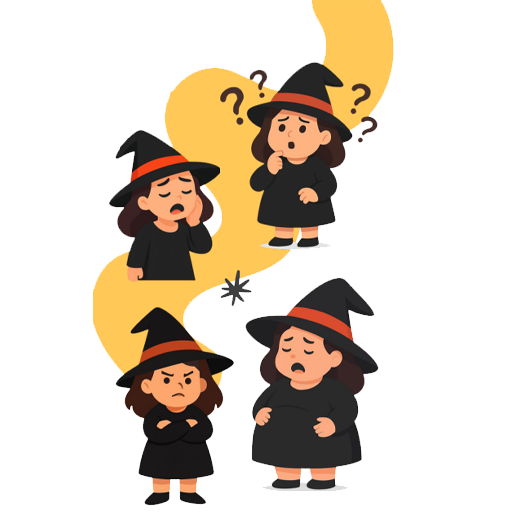
1. Sleepy
Progesterone helps you sleep deeply. As it drops, sleep gets lighter, and night sweats wake you too.
2. Forgetful
Estrogen helps fuel your brain. When it swings, so does your focus. The fog is real, and it usually lifts.
3. Weighty
Falling estrogen moves fat to your belly. Muscle loss slows metabolism. Not a willpower problem.
4. Frosty
Lower estrogen thins and dries vaginal tissue, so sex can hurt. Testosterone declines too, and desire often drops with it.
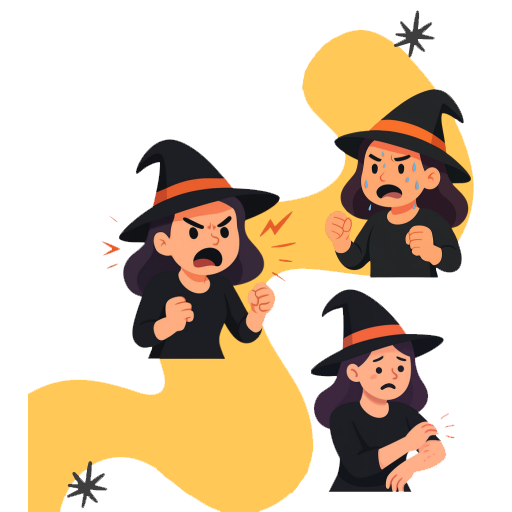
5. Sweaty
Swinging estrogen confuses your hypothalamus,the brain's thermostat. It reads "normal" as too hot and dumps heat fast.
6. Witchy
Hormone swings plus lost sleep make the brain's emotional center more reactive. Not your personality. Chemistry.
7. Anxious
Falling estrogen lowers serotonin. Less progesterone means less support for GABA,the calming signal that acts as your brain's brake pedal.
FOR EDUCATIONAL PURPOSES ONLY. NOT
MEDICAL ADVICE. REFERENCES BELOW
References
For educational purposes only. This guide is general health information, not medical advice, and
it does not replace an assessment with your own healthcare provider. Talk to a qualified
provider about your symptoms before starting, stopping, or changing any treatment.
- Baker FC, Lampio L, Saaresranta T, Polo-Kantola P. Sleep and sleep disorders in the menopausal transition. Sleep Med Clin. 2018;13(3):443-456.
- Greendale GA, Huang MH, Wight RG, et al. Effects of the menopause transition and hormone use on cognitive performance in midlife women. Neurology. 2009;72(21):1850-1857.
- Mosconi L, Berti V, Dyke J, et al. Menopause impacts human brain structure, connectivity, energy metabolism, and amyloid-beta deposition. Sci Rep. 2021;11:10867.
- Lovejoy JC, Champagne CM, de Jonge L, Xie H, Smith SR. Increased visceral fat and decreased energy expenditure during the menopausal transition. Int J Obes. 2008;32(6):949-958.
- Greendale GA, Sternfeld B, Huang M, et al. Changes in body composition and weight during the menopause transition. JCI Insight. 2019;4(5):e124865.
- Society of Obstetricians and Gynaecologists of Canada. Guideline No. 422b: Menopause and genitourinary health. J Obstet Gynaecol Can. 2021.
- Davis SR, Wahlin-Jacobsen S. Testosterone in women: the clinical significance. Lancet Diabetes Endocrinol. 2015;3(12):980-992.
- Yuksel N, Evaniuk D, Huang L, et al. Guideline No. 422a: Menopause: vasomotor symptoms, prescription therapeutic agents, complementary and alternative medicine, nutrition, and lifestyle. J Obstet Gynaecol Can. 2021;43(10):1188-1204.
- Freedman RR. Menopausal hot flashes: mechanisms, endocrinology, treatment. J Steroid Biochem Mol Biol. 2014;142:115-120.
- Yoo SS, Gujar N, Hu P, Jolesz FA, Walker MP. The human emotional brain without sleep: a prefrontal amygdala disconnect. Curr Biol. 2007;17(20):R877-R878.
- Maki PM, Kornstein SG, Joffe H, et al. Guidelines for the evaluation and treatment of perimenopausal depression. Menopause. 2018;25(10):1069-1085.
- Schweizer-Schubert S, Gordon JL, Eisenlohr-Moul TA, et al. Steroid hormone sensitivity in reproductive mood disorders: on the role of the GABAA receptor complex and stress during hormonal transitions. Front Med. 2021;7:479646.